


Free capacity.
Please RESERVE your seats in advance.
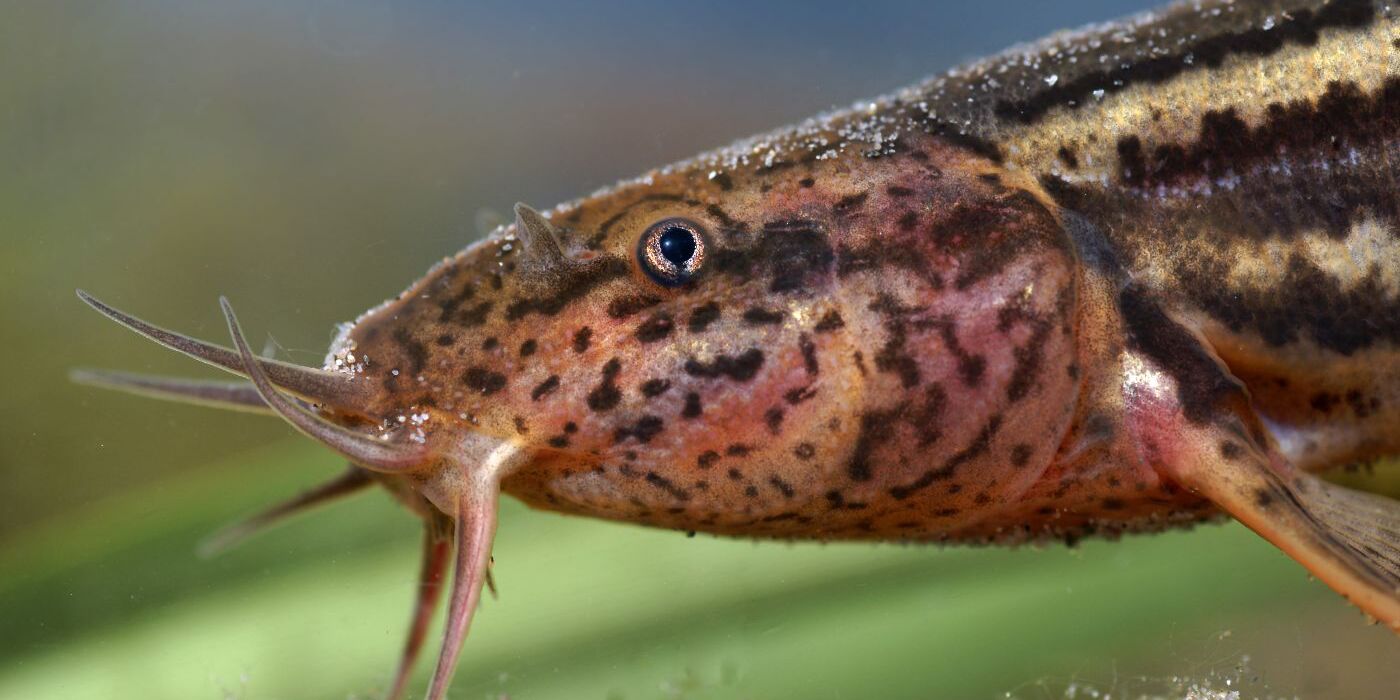
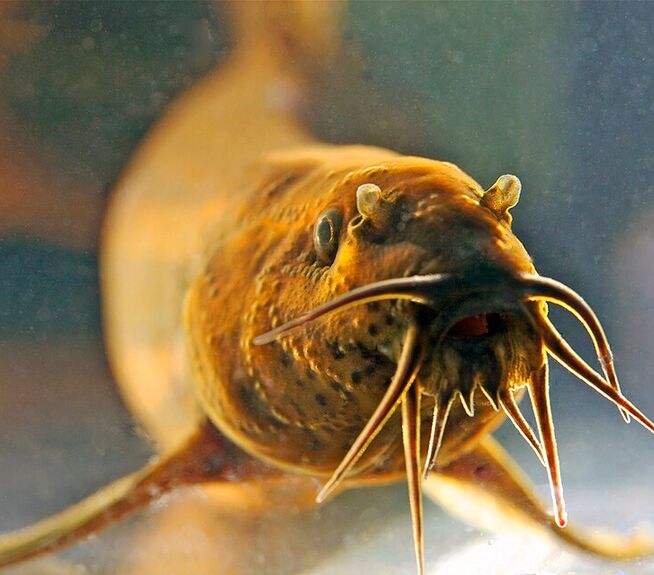
It is me, the weatherfish. In the year 2026, I have the honor of being named Fish of the Year. Perhaps you have never seen me, as I mostly live well hidden in the soft mud of quiet waters.
In some regions, I am also called 'fart gudgeon' or 'thunderstorm farter'. That may sound unusual, but there is an exciting reason for it. You can find out here why I bear these names and what makes me and my fellow species so special.
See you soon!
Your weatherfish
Header image: Clemens Ratschan
Article image: Tiit Hunt, via Wikimedia Commons
Weatherfish are freshwater fish belonging to the cyprinid family and, within this order, to the loach family.
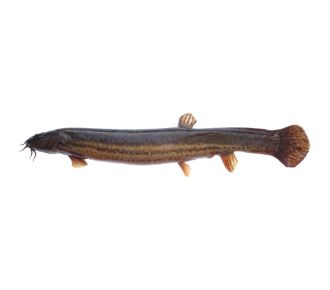
Image credit:George Chernilevsky, via Wikimedia Commons
The weatherfish has an eel-like, elongated body that is almost circular at the front and laterally flattened towards the back. The body is yellowish-brown in color, with the darker back becoming lighter towards the belly. On the sides, there are striking brown longitudinal bands with many small dark spots.
The skin is covered by a thick layer of mucus; the tiny scales are barely visible. The caudal fin is rounded. The dorsal, pelvic, and anal fins are set far back.
The small mouth is subterminal and surrounded by 6 longer barbels on the upper jaw and 4 shorter barbels on the lower jaw.
Weatherfish show a very distinct sexual dimorphism. Males are generally smaller, their pectoral fins are longer and tapered. Furthermore, the second fin ray is also thickened. Especially during the spawning season, males can easily be distinguished by the clearly reddish-colored lateral ridge between the dorsal and anal fins (spawning tubercles).
The distribution area of the weatherfish lies in Central and Eastern Europe and Western Asia, roughly from the Loire in France, along the northern edge of the Alps to the Volga river basin. The fish is absent in Scandinavia, the tributaries to the Arctic Ocean, and the Mediterranean region.
In Austria, the species is primarily found in the eastern part of the country, with significant populations in the March and Thaya river basins (March floodplains, Alte Thaya), the Danube floodplains, and the Lake Neusiedl region.
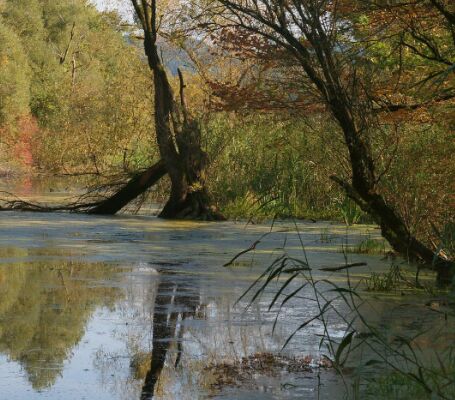
Photo credit: Clemens Ratschan
Original habitats of the weatherfish are natural standing to slowly flowing waters (e.g. pools, drainage ditches and cut-off meanders, oxbow lakes, ponds or moorland waters, floodplains) with a soft muddy bottom into which the nocturnal fish burrows during the day.
Weatherfish have a special adaptation for these often oxygen-poor habitats. With their highly vascularized intestinal mucosa, they can absorb oxygen from swallowed air. After passing through the intestine, the air escapes via the anus, producing a whistling sound that has earned the species the nickname 'fart gudgeon'. Since weatherfish frequently appear at the water's surface to swallow air, particularly when atmospheric pressure changes – such as before a thunderstorm – they are also referred to in some regions as 'weather fish' or 'thunderstorm farter'. This special adaptation also enables them to undertake short land journeys if drying out threatens.
During temporary drying out or in winter, weatherfish burrow up to half a meter deep into the mud and reduce their metabolism to a minimum. In this state, they can survive unfavorable periods for up to a year.
Weatherfish search for their food primarily on the bottom of the water body. They feed on invertebrates such as snails, insect larvae, crustaceans, and mussels. However, they do not turn their noses up at algae and detritus and even eat small fish or their eggs.
Weatherfish reach sexual maturity at the age of 2 to 3 years. When water temperatures rise above 16°C in April, the spawning season begins, lasting into July. Optimal water temperatures for the larvae are 19°C to 23°C. During spawning, the females (rovings) are closely embraced by the males (milters). In several spawning bouts, the females release 4,500 to 13,000 sticky eggs, each approx. 1.5 mm in size, which are mostly attached to aquatic plants or can sometimes lie freely on the bottom of the water.
Similar to the larvae of tailed amphibians (salamanders and newts), the larvae also bear external gill filaments that are covered by an operculum during metamorphosis. This allows them to make better use of the often low oxygen content of the waters they prefer.
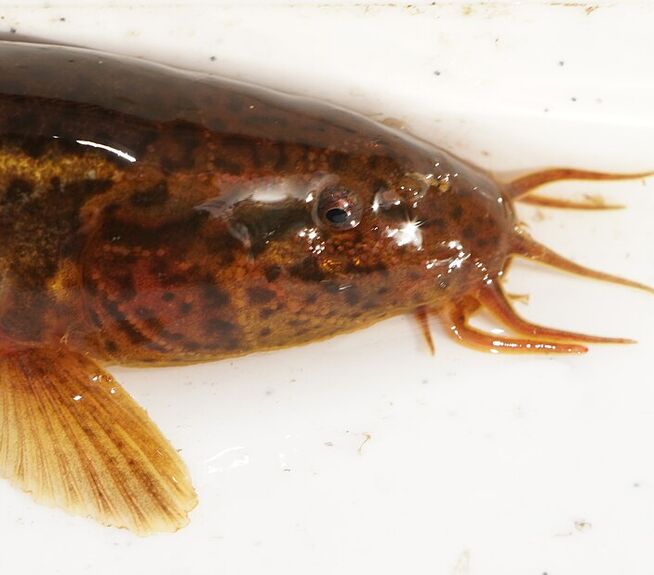
Photo credit: Lorenz Seebauer, via Wikimedia Commons
Formerly, the weatherfish occurred in all federal states of Austria except Vorarlberg, Tirol, and Carinthia. Today, according to the 'Red List of Austrian Fishes', it is classified as 'critically endangered'. In the 2008 Austrian report on the conservation status of FFH species (Fauna-Flora-Habitat species) and habitat types, the conservation status of the weatherfish is listed as unfavorable-bad. This is primarily caused by habitat losses due to river channeling, decoupling of floodplains from main water bodies (e.g. through riverbed incision, climate change) and intensive agriculture.
The protection of floodplains through concrete renaturation measures and the restoration of dynamic river landscapes, feeding of floodplain waters, and stabilization of the riverbed are necessary to preserve the weatherfish populations for the future.
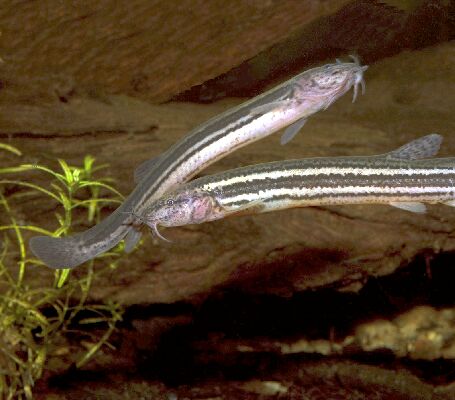
Image credit: Bernt René Voss Grimm, via Wikimedia Commons
Because weatherfish live at the bottom of heavily weeded waters and mostly burrow in the mud during the day, they are extremely rarely seen.
Unsere Individuelle Wassererlebnissafari bietet Ihnen eine wunderbare Gelegenheit mehr über die Fischarten des Neusiedler Sees und des ST. MARTINS Badesees zu erfahren. Bei dieser Safari tauchen Sie buchstäblich in die Geheimnisse der Seewinkler Gewässer und auch des Neusiedler Sees ein und können anhand von kleinen Versuchen die besonderen Eigenschaften dieser Gewässer kennen lernen. Eine entspannte Bootfahrt am Neusiedler See rundet diese 3,5-stündige Safari zum Thema Wasser ab.
The top searches of the last 30 days


Webcam & Weather

Beach bar
Open 10:00 a.m.–8:00 p.m.


The Discovery
of Adventure & Retreat
Enjoy the retreat from everyday life in a luxurious way - with a Great Discovery Tour and 50 min. feel-good time at Treatments by St. Martins. Discover yourself anew!

Relax! Day vacation - THE ORIGINAL
Enjoy a day out in the thermal spa business class under the motto "Relax!". Experience a spa stay in a class of its own with exclusive Relax! services. Your short vacation with a long-term effect is waiting for you!

Beyond Everyday Life Beauty & Safari
Leisure & wonder. Freedom & comfort. For a whole week. Experience the unique connection between healing thermal water and a tasteful lodge, nature experience and relaxation. Renew yourself!


