


Free capacity.
Please RESERVE your seats in advance.
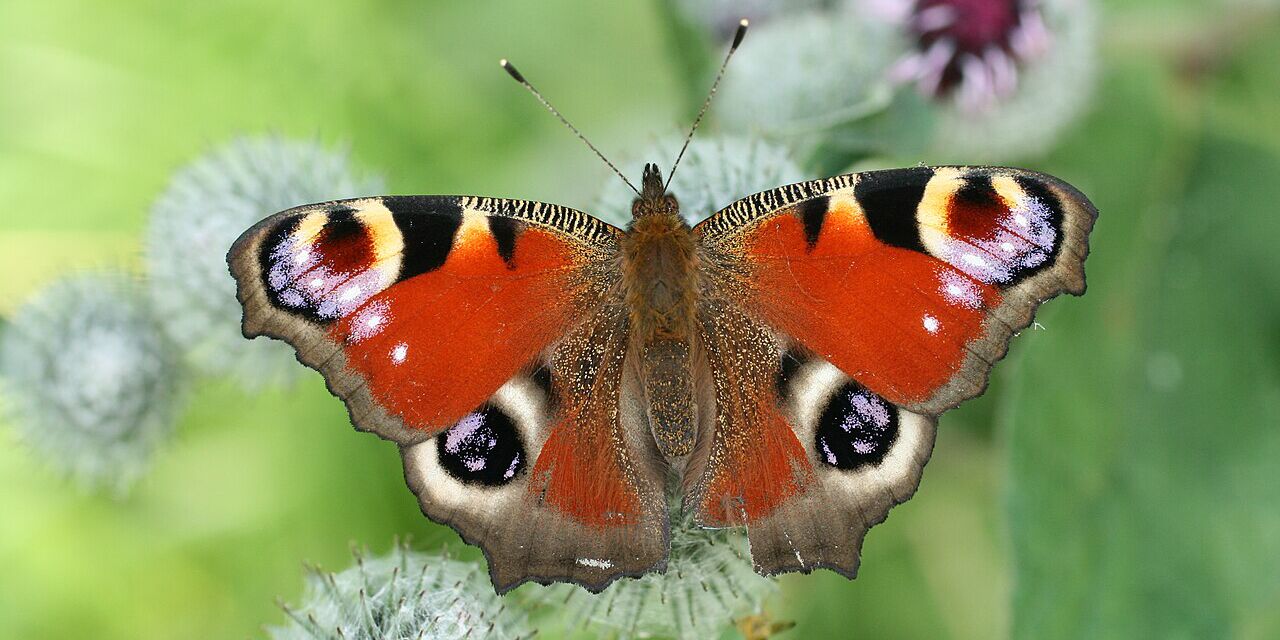
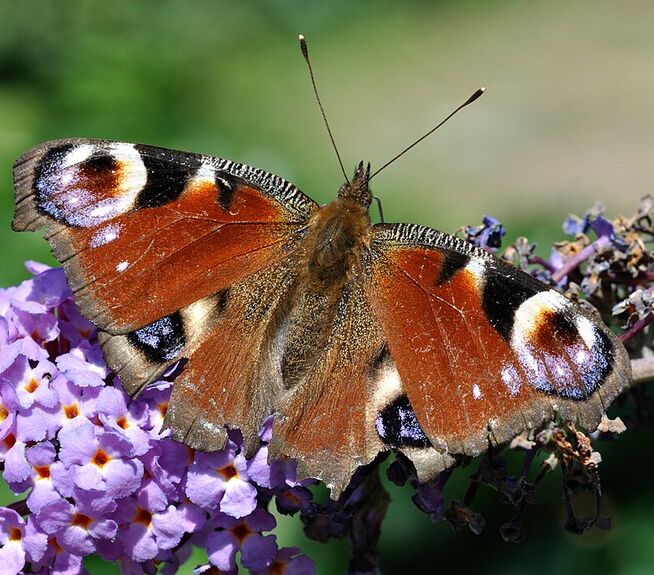
We usually see real peacocks with their magnificent plumage at zoos or in castle gardens, but here at the “ Seewinkel ,” there’s a flying, miniature version:
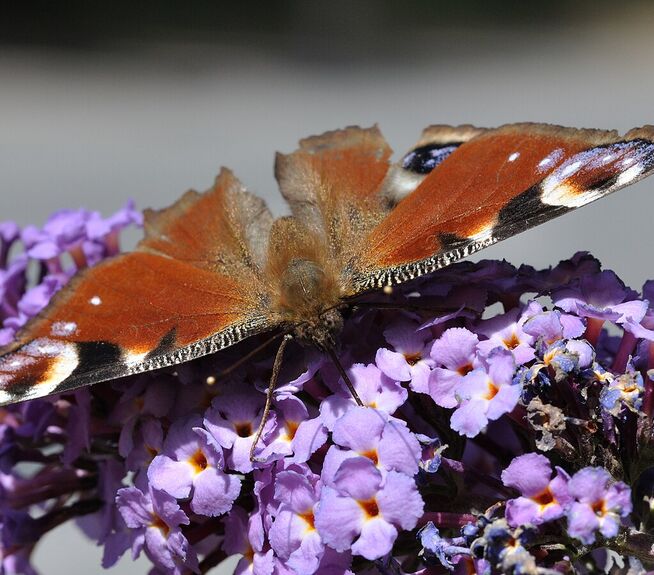
We’re talking about the so-called peacock butterfly! This butterfly has a very distinctive feature reminiscent of a peacock’s feathers, but be careful—when its wings are folded, it can easily be mistaken for a withered leaf.
But now I don't want to keep you any longer. Just read more interesting facts about me and my fellow species on the following pages.
See you soon!
Your Peacock Butterfly
Header image: Korall, via Wikimedia Commons
Article image: Quartl, via Wikimedia Commons
Featured image: Quartl, via Wikimedia Commons
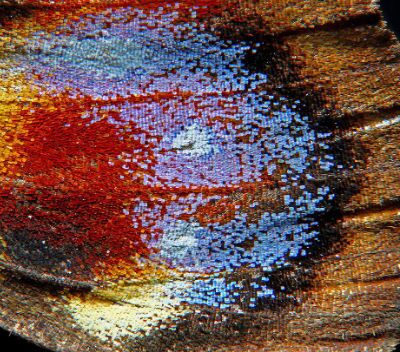
The peacock butterfly has four distinctive, iridescent eye spots (blue, black, yellow, and white) on the upper surface of its reddish-brown wings, which resemble the eye spots on a peacock's feather and are intended to deter predators.
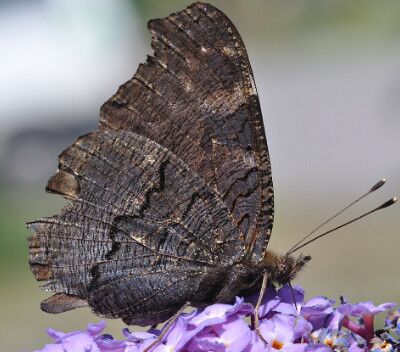
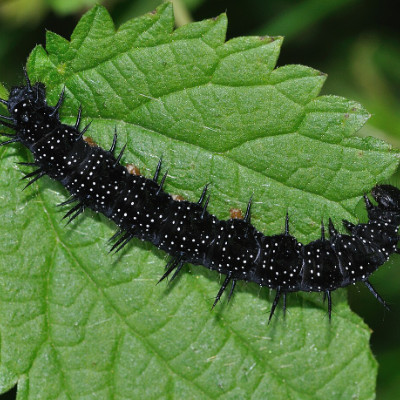
The undersides of the wings, on the other hand, are mottled dark brown to blackish brown and textured. When the butterfly folds its wings together, it looks like a dry, withered leaf and is perfectly camouflaged. The caterpillars are black, covered with numerous small white spots, and have black spines.
Featured image: Quartl, via Wikimedia Commons
With its wings spread, the peacock butterfly is almost unmistakable due to its distinctive eye spots. However, at first glance, when its wings are closed, it can be confused with other large white butterflies that have dark undersides, such as the Small Tortoiseshell (Aglais urticae) or the C-spotted White (Polygonia c-album), whose wing undersides also feature leaf-like camouflage markings.
Adult butterflies feed on the nectar of numerous plants (such as various species of clover, thistles, or willow catkins in early spring, and, in the garden, also on butterfly bush) as well as on windfall fruit and other plant sap in the fall.
The caterpillars, on the other hand, are highly specialized and feed almost exclusively on the leaves of the stinging nettle (Urtica dioica).
To support butterflies, it’s important not only to provide nectar-rich flowers for the butterflies themselves but also to preserve the host plants for the caterpillars. Nettles in the garden help butterflies like the peacock butterfly reproduce. Incidentally, stinging nettles aren’t just a food source for peacock butterfly caterpillars. The caterpillars of the small tortoiseshell, red admiral, and map butterfly also feed on them.
Featured image: Quartl, via Wikimedia Commons
After overwintering, the moths mate in the spring. The female lays up to several hundred eggs in tightly packed clusters on the underside of nettle leaves in sunny locations. The hatched caterpillars initially live in groups within a web they have woven together. After the growth and feeding phase, they pupate as hanging pupae on plant stems or walls. After about two weeks of pupation, the fully developed butterfly emerges.
Peacock butterflies produce two generations per year. The first generation flies from June through August, and the second from August through October. The second generation then overwinters as adults.
Unlike many other insects, the peacock butterfly does not overwinter as an egg, caterpillar, or pupa, but as a fully grown butterfly (imago). To do this, it seeks out cool, damp, and sheltered places as early as late summer, such as tree hollows, rock crevices, holes in the ground, caves, or man-made locations like unheated basements, attics, garden sheds, or storage sheds.
During the winter, the moth enters a state of cold torpor, drastically slows its metabolism, and uses its body’s own antifreeze agents (such as glycerin) to survive temperatures well below freezing without harm. If heated rooms become too warm in winter, the moths will wake up prematurely and waste valuable energy—in such cases, you should carefully relocate them to a cool, sheltered place.
The peacock butterfly is widespread throughout most of Europe (with the exception of the far north) and across parts of Asia as far as Japan.
It inhabits a wide variety of habitats: from natural gardens, parks, and orchard meadows to forest edges and field copses. In the “ Seewinkel ,” the peacock butterfly can be found wherever there are natural structures, flower-rich areas, and sufficient stands of stinging nettles as food plants for the caterpillars.
The peacock butterfly is currently considered to be of no concern in Central Europe and is one of the most common and well-known native butterflies. Of course, the species also benefits from pesticide-free gardens and from wild corners of the garden where stinging nettles can be left standing even through the winter.
Featured image: Quartl, via Wikimedia Commons
Peacock butterflies can generally be seen throughout Austria. Since they overwinter as adult butterflies, they can also be spotted on safaris as early as early spring.
But even in late fall, they can still be seen from time to time, and they also like to feed on the juice of fallen grapes and other fruits.
Fall is the time of year when it’s not just insects that have to adjust, to a greater or lesser extent, to the winter season. Many organisms actively prepare for winter during this season by eating more, gathering food supplies, or setting up places to hibernate. You can learn more about what’s happening in the animal and plant worlds this fall during the “Gourmet Safari,” which focuses specifically on the various strategies for overwintering. During the Gourmet Safari, you’ll not only learn about current events in nature but, above all, how the animal and plant worlds prepare for winter. In addition, a picnic featuring regional delicacies rounds out the safari.
The peacock butterfly caterpillar pupates
A peacock butterfly hatches from its chrysalis
The top searches of the last 30 days


The Discovery
of Adventure & Retreat
Enjoy the retreat from everyday life in a luxurious way - with a Great Discovery Tour and 50 min. feel-good time at Treatments by St. Martins. Discover yourself anew!

Relax! Day vacation - THE ORIGINAL
Enjoy a day out in the thermal spa business class under the motto "Relax!". Experience a spa stay in a class of its own with exclusive Relax! services. Your short vacation with a long-term effect is waiting for you!

Beyond Everyday Life Beauty & Safari
Leisure & wonder. Freedom & comfort. For a whole week. Experience the unique connection between healing thermal water and a tasteful lodge, nature experience and relaxation. Renew yourself!


