


Free capacity.
Please RESERVE your seats in advance.
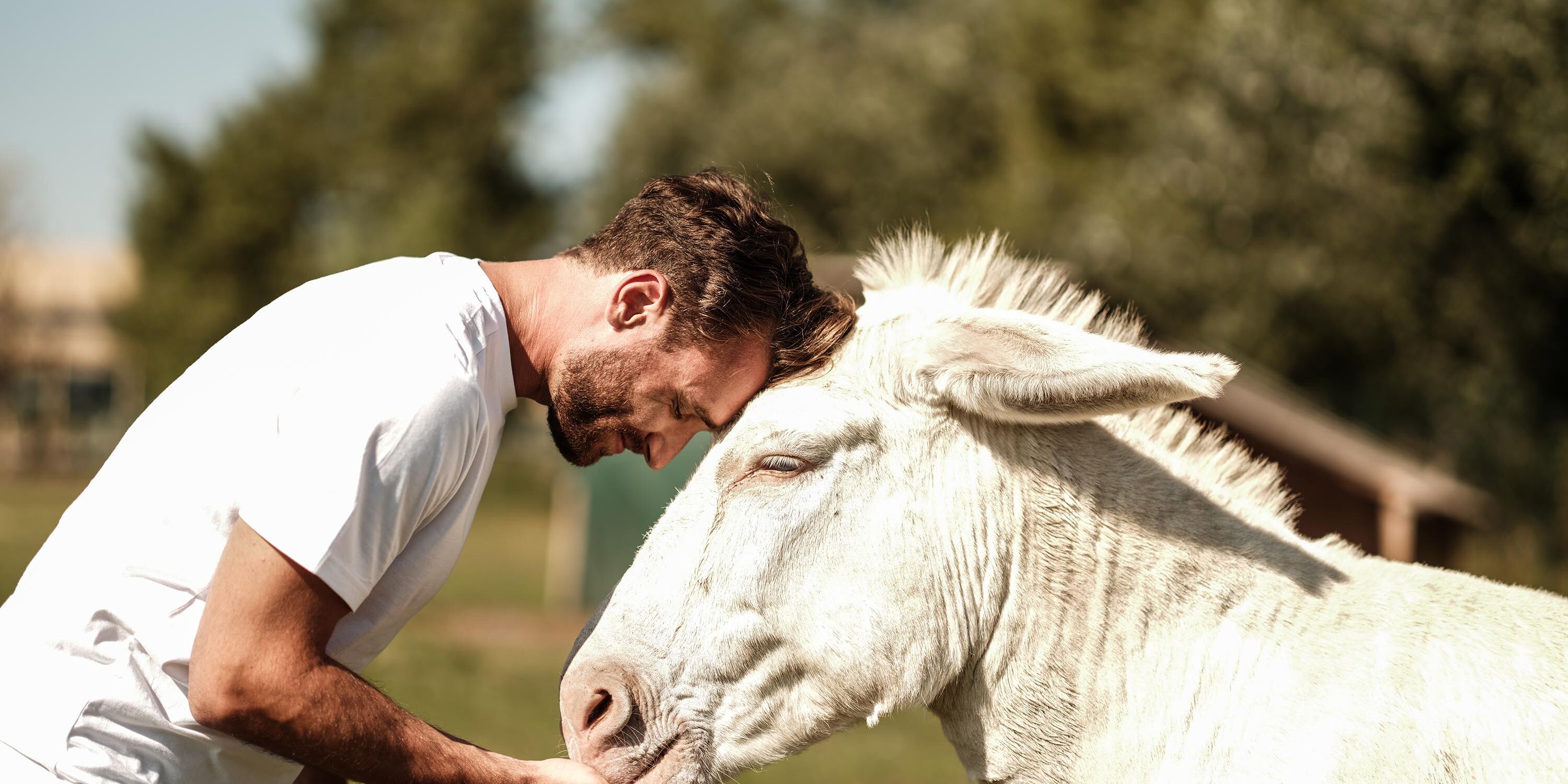
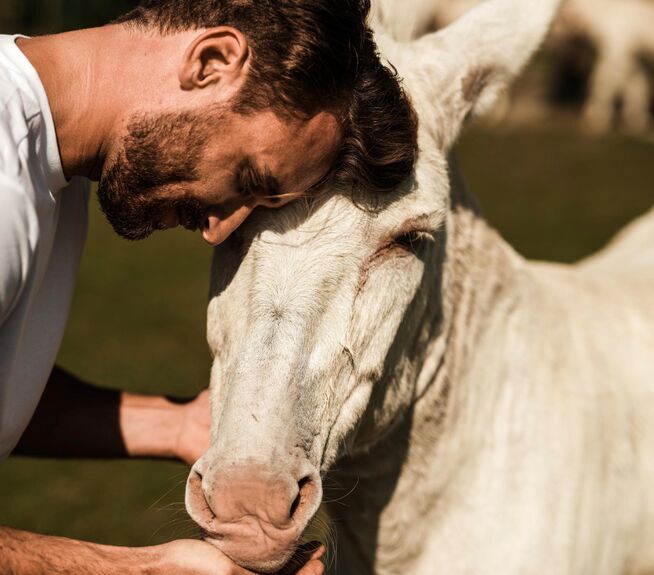
An old Arabic proverb says: “Follow a goat and it will lead you into the abyss—follow a donkey and it will lead you safely home!”
Yes, that's what we donkeys are like: calm, attentive, and we prefer to think before we act. Many call it stubborn, but we call it common sense. We always assess a situation before getting involved. But whoever manages to win our trust gains a loyal, reliable companion. And so we have been accompanying you humans for a long time.
You can find out more about us and our newest addition, the little female donkey “Maria Theresia,” in this newsletter.
Your Baroque Donkey
According to current knowledge, all domestic donkeys are descended from the African wild ass. Domestication by humans likely began more than 6,000 years ago in Egypt.
Depending on the breed, donkeys reach a shoulder height (at the withers) of 80 to 160 cm. Baroque donkeys are medium-sized donkeys with a shoulder height of about 120 cm.
Donkeys have a life expectancy of 30–40 years.
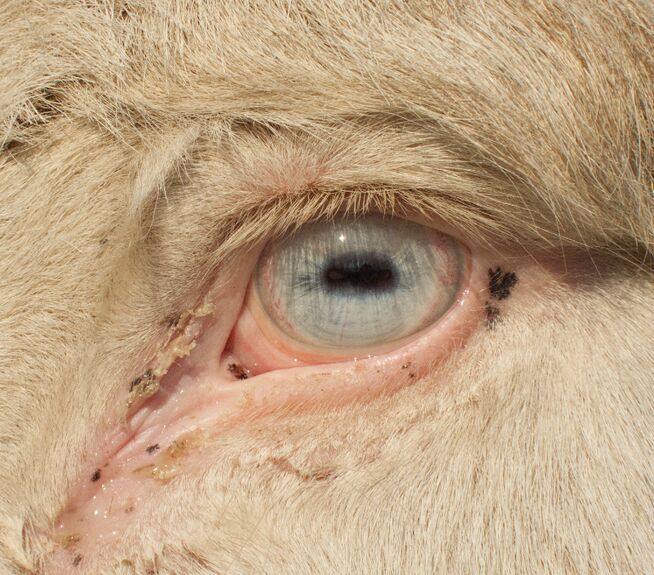
For a long time, white Baroque donkeys were referred to as albinos, but this has since been proven incorrect. True albinism is characterized by the complete absence of pigment in both the coat and the eyes. Consequently, the coat is pure white and the eyes are red, since the blood vessels are not covered by pigment.
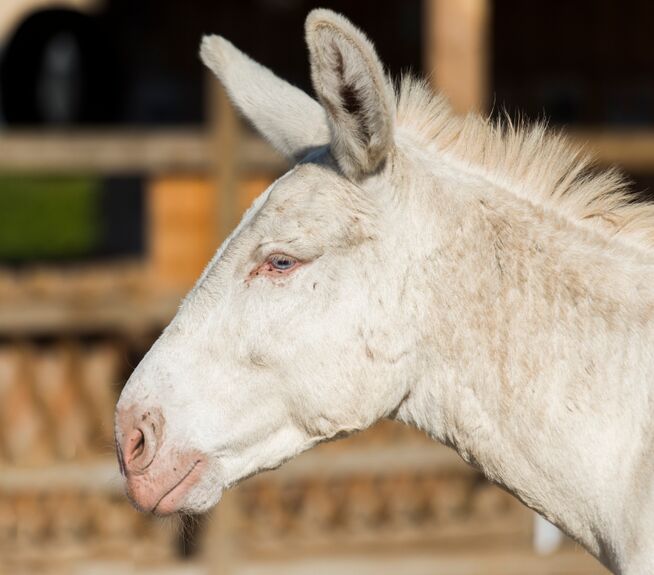
White Baroque donkeys, on the other hand, have a whitish-light yellow coat and blue eyes. The skin and hooves are poorly pigmented and therefore pink. The yellowish color of the coat, which is much more pronounced in foals, has also earned the foals the name "Gelblinge" (yellowlings). The coat color of the Baroque donkey was long mistakenly referred to as "Cremello". However, a German research team recently discovered that a mutation exists in a specific section of a gene responsible for coloration, which occurs in all examined donkey breeds only in the Baroque donkey. This is the exact same gene mutation that is responsible for the light coat color and blue eyes in white tigers.
The mutation is inherited in an autosomal recessive pattern, which means that the light coat color is not inherited dominantly but is preserved only when two Baroque donkeys are bred together.
The white Baroque donkey is a medium-sized breed of donkey, usually with a standing mane and short hair. Hanging manes and long hair are less common.
Donkeys owe their long ears—which are considerably longer than those of horses—to their original homeland, the deserts and mountains of North Africa. On the one hand, they serve a thermoregulatory function. Just like elephants, their large size and thin skin allow them to cool down more quickly, thus protecting the donkey from overheating. On the other hand, donkeys also have very sensitive hearing and can rotate their ears independently of one another 180 degrees forward and backward, allowing them to pinpoint the source of sounds.
However, these large ears have given them the bad reputation of being "stupid animals", even though the exact opposite is the case.
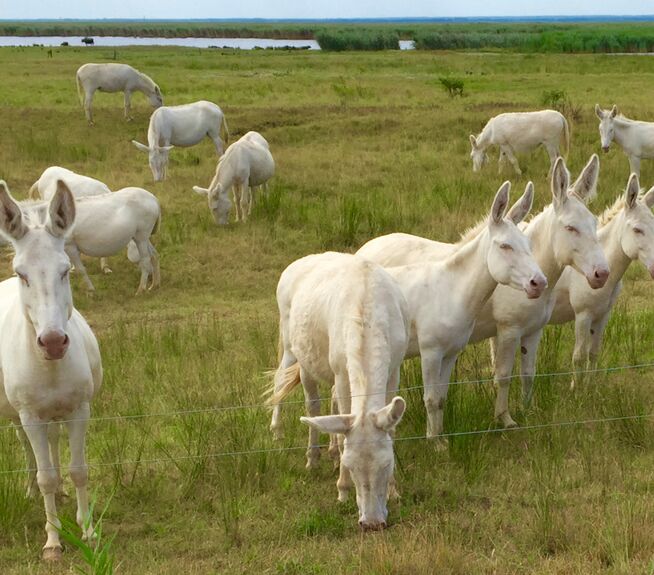
Originally, the White Baroque donkey was kept mainly in the Hungarian Carpathian Basin and in Austria. However, keeping them was largely reserved for the high nobility. With the collapse of the monarchy, the donkeys also dwindled. Today there are only a few left, whose keeping is also mainly restricted to their historical area. The two largest breeding groups are located in the Sandeck-Neudegg conservation zone of the Neusiedler See – Seewinkel National Park (Burgenland) and at Schloss Hof (Lower Austria). A few can still be found in zoos and private ownership in Germany, Italy, Switzerland, France, and Spain.
Donkeys are social animals that only feel safe in a herd. Depending on the food and water availability of their habitat, wild donkeys live in groups comprising about 10 mares and their foals. Under very good environmental conditions, loosely structured groups of up to 50 animals can also come together. Young stallions are also on the move in groups until they reach sexual maturity, which occurs at 2-2.5 years of age. Adult stallions behave strictly territorially. They defend their territory, which can be up to 15 km² in size. Mare groups within a territory are claimed by the stallion. This can also lead to fierce fights between stallions.
European domestic donkey breeds originate from the African wild donkey, which is distributed in the mountainous desert regions of North Africa. The lean meadows of the Seewinkel therefore provide the perfect diet for the White Baroque donkey. Donkeys need low-energy feed with a high crude fiber content. Too lush pastures quickly lead to obesity and colic. Feeding the animals fruit, bread, cabbage, etc. can be fatal for them.
The Austro-Hungarian White Baroque donkey was bred in the 17th and 18th centuries, hence the name "Baroque donkey". In this era, white animals were considered "bringers of light" and stood for good. The white donkey was a status symbol. So whoever wanted to be someone in the Baroque period owned a white donkey.
Baroque donkeys were already considered "lost" in the 1970s. In 1986, however, a few specimens of this ancient breed were rediscovered in the Herberstein Wildlife Park. In 2017, the Association for the Conservation of White Baroque Donkeys succeeded in having the breed recognized by the official authorities. This makes the White Baroque donkey Austria's only purebred donkey.
Today, the Association for the Conservation of the White Baroque Donkey is intensively involved in breeding this highly rare domestic animal breed! St. Martins Therme & Lodge is part of the association's board and is also represented on the Baroque donkey evaluation committee! Feel free to follow @barockesel on Instagram!
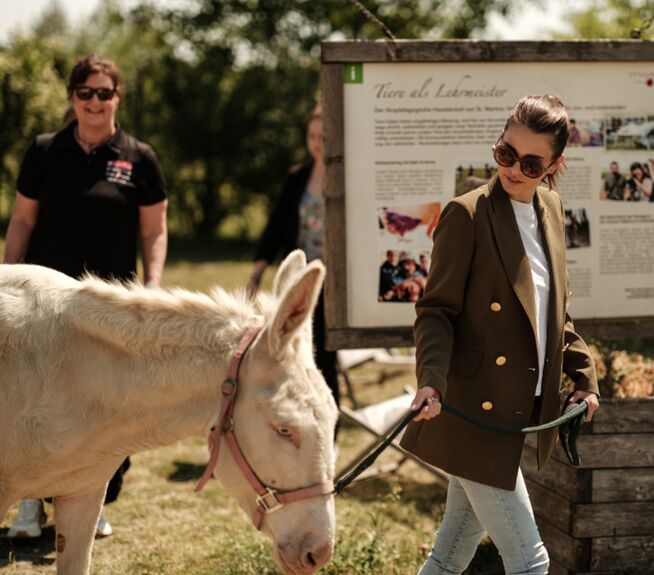
Donkeys are often described as stubborn and stupid. But the exact opposite is the case. Their origin in mountainous desert regions, where blind flight can mean death, has led donkeys to independently assess every situation as dangerous or harmless. This characteristic also makes the donkey a reliable companion to humans. Donkeys are therefore increasingly valued as therapy animals. For example, they radiate a special calmness that can also be transmitted to humans.
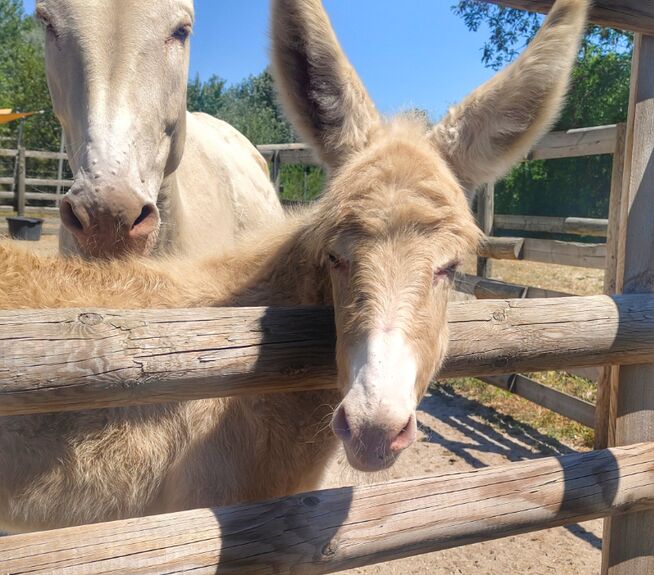
A small herd currently consisting of 7 White Baroque donkeys lives at the Green Care-certified Gut ST. Martins of St. Martins Therme & Lodge: 2 mares (one of them heavily pregnant), 1 foal, and 4 geldings. The foal was born on June 7, 2026, and was given the almost venerable name Maria Theresia. She is affectionately called Maresi, which also fits her coat color perfectly. All adult donkeys are also repeatedly part of animal-assisted interventions (AAI) with our guests. AAI describes the planned and targeted use of animals in education and/or therapy with specially trained animals kept in a species-appropriate manner.
In addition, the donkeys help preserve the pasture-like steppe landscape on the grounds of St. Martins thermal baths Lodge.
Tip: As part of our ST. MARTINS Business Lodge, we offer highly competent animal-assisted training!
“I-AH Instead of AI” – What Leaders Can Learn from Donkeys - deliberately plays on the terms. The “I-AH,” the donkey’s characteristic bray, also symbolizes a shift in perspective: less artificial intelligence, more natural intelligence.
This program combines current insights from personality development, modern leadership research, and animal-assisted intervention into an extraordinary learning experience. Suitable for groups of four to 16 people.
More about the animal-assisted programs of the St. Martins Business Lodge:
Maresi in the pasture
The top searches of the last 30 days


The Discovery
of Adventure & Retreat
Enjoy the retreat from everyday life in a luxurious way - with a Great Discovery Tour and 50 min. feel-good time at Treatments by St. Martins. Discover yourself anew!

Relax! Day vacation - THE ORIGINAL
Enjoy a day out in the thermal spa business class under the motto "Relax!". Experience a spa stay in a class of its own with exclusive Relax! services. Your short vacation with a long-term effect is waiting for you!

Beyond Everyday Life Beauty & Safari
Leisure & wonder. Freedom & comfort. For a whole week. Experience the unique connection between healing thermal water and a tasteful lodge, nature experience and relaxation. Renew yourself!


