


Free capacity.
Please RESERVE your seats in advance.
Warning About Fraudulent WhatsApp Messages
Fraudulent WhatsApp messages regarding hotel reservations are currently circulating. These messages ask guests to enter personal information or credit card details via a link. We would therefore like to remind you that messages from our resort are sent exclusively from official email email addresses. We never request credit card information via a link in a WhatsApp message. Please do not click on such a link or enter any information. Ignore and delete the message, then block and report the number in WhatsApp. Your reservation with us remains valid in any case.
UPDATE from October 27, 2026, 10:00 a.m.
How the scammers obtained the reservation data.
A guest management portal used by the entire hotel industry—which handles pre-registrations, guest information, and check-outs, among other things—has informed us that the company has been the victim of a cyberattack. According to the latest information, this incident also affects data from guests at our resort: hotel, name, cell phone number, arrival and departure dates, and booking costs for reservations with arrival or departure dates between October 17 and 21, 2026. According to the service provider, credit card data and special categories of personal data as defined in Article 9 of the GDPR are expressly not affected.
Together with our IT security, data protection, and external security specialists, we immediately implemented the necessary protective measures and have suspended our collaboration with the service provider until further notice. Fraudulent activities are being reported immediately to the relevant internet service providers and authorities. Our own systems have been reviewed and show no irregularities. The operation of our hotel and our website thermal baths remains unaffected.
If you have any questions, you can reach us at +43 2172 20 500 700 or by email at anfragen@stmartins.at.
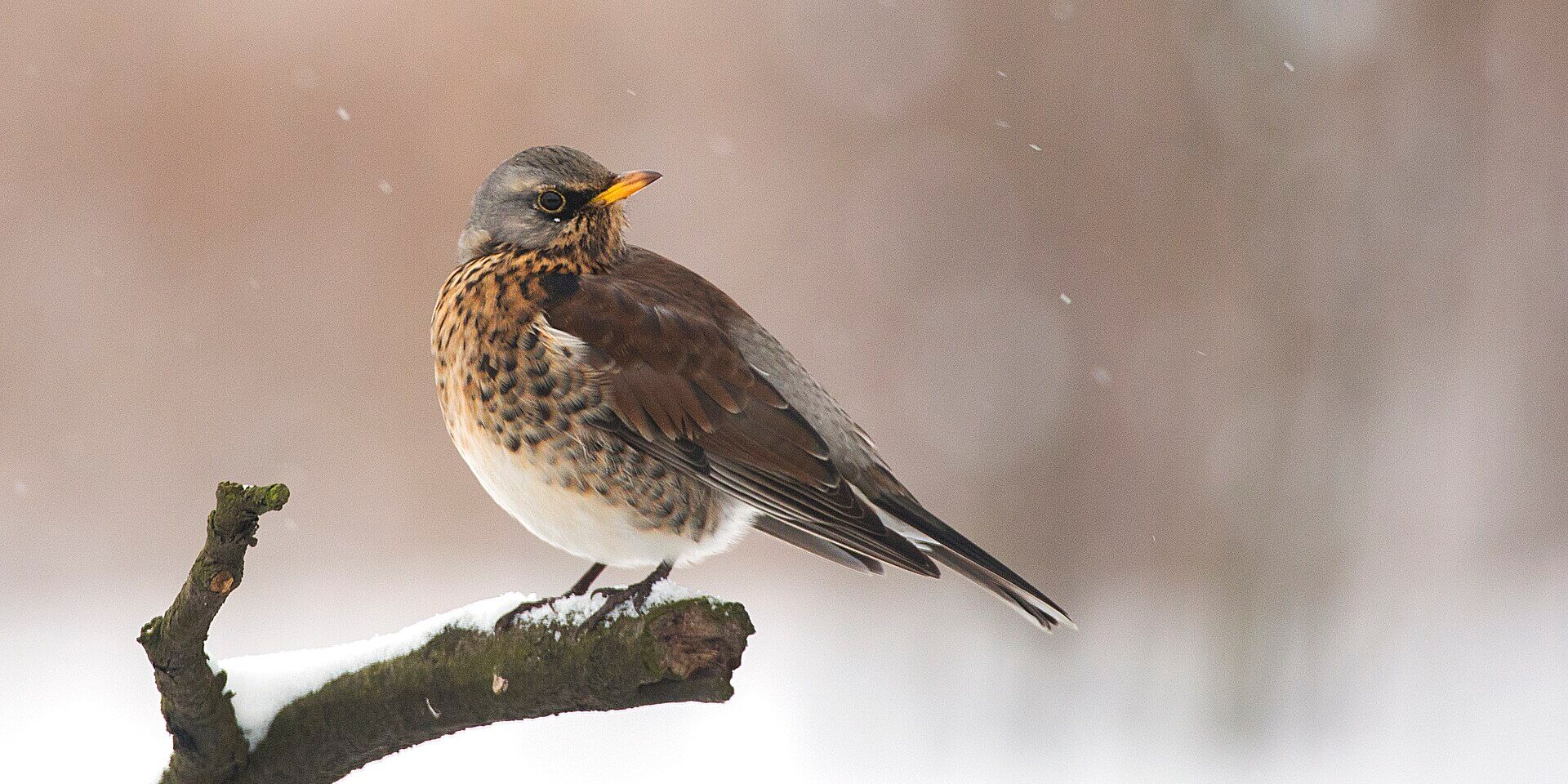
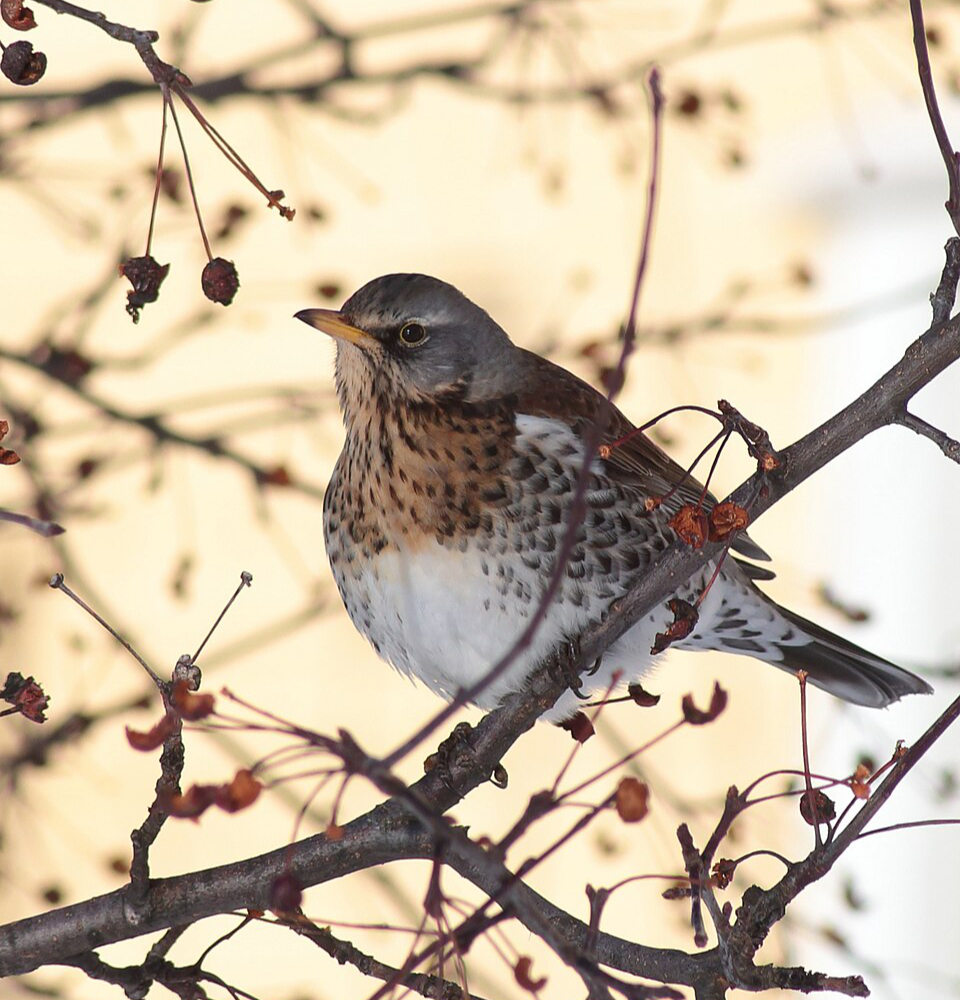
It’s me, the fieldfare. Why am I checking in right now? Because I’m a frequent winter visitor to the Seewinkel and, from now on, I’ll often be roaming the region in large flocks. I owe my name to my love for juniper berries. Want to meet me sometime? You’ll have a chance to do so if you join a “Winter Birdwatching” tour with the St. Martins Rangers.
See you soon!
Your field thrush
Header image: Jerzystrzelecki, via Wikimedia Commons
Article image: Estormiz, via Wikimedia Commons
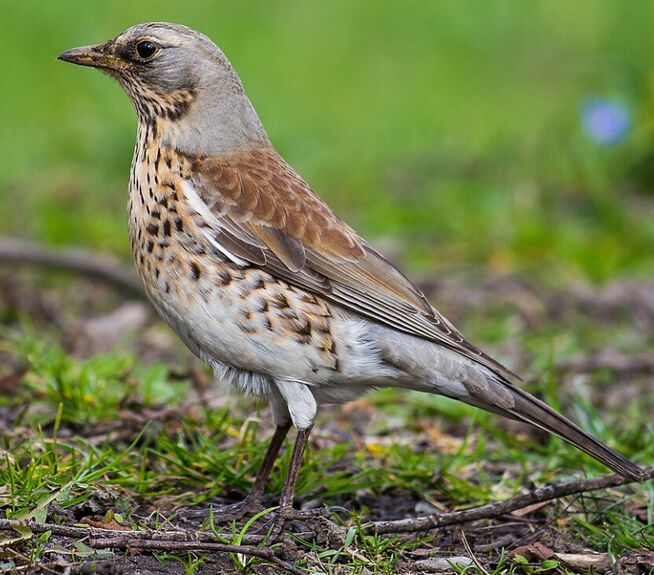
Photo credit: Frankie Fouganthin, via Wikimedia Commons
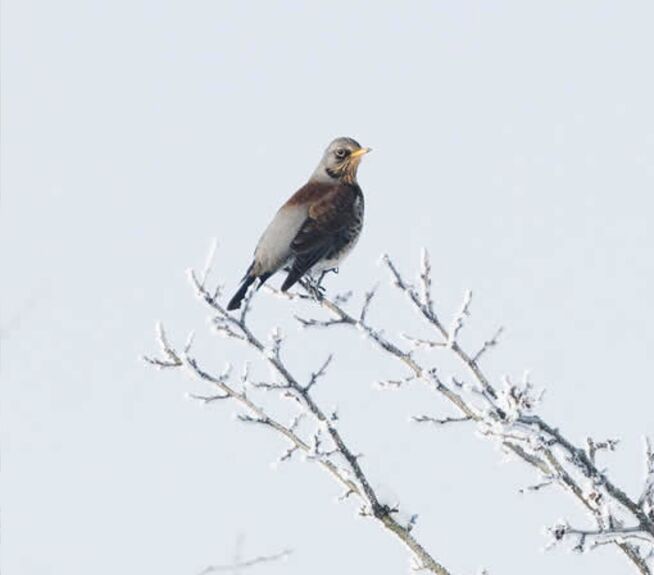
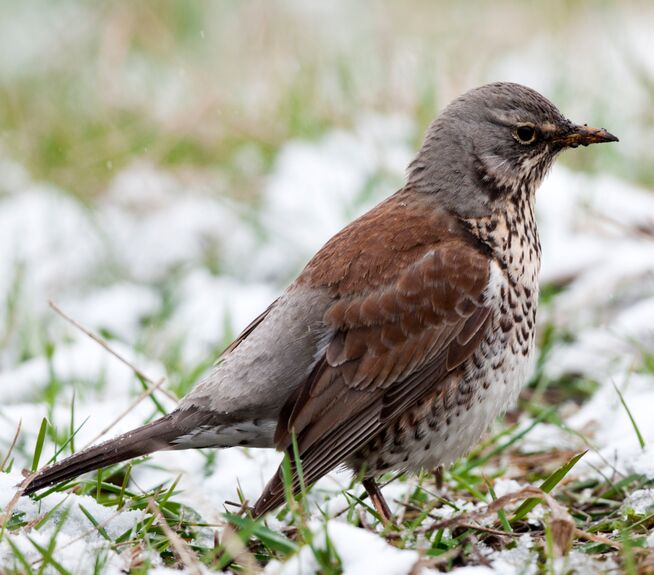
The fieldfare is about the same size as a blackbird. It has a gray head and rump. Its back and wings are brown, and its tail is black. Its breast has many spots on an orange-beige to rust-colored chest, and its belly is white.
It has an elongated, robust body and a strong, medium-length, straight beak. The underwing coverts are white.
The most common call of the fieldfare is its very characteristic "schak-schak-schak" chattering. It is especially audible as the birds take flight and among migrating flocks.
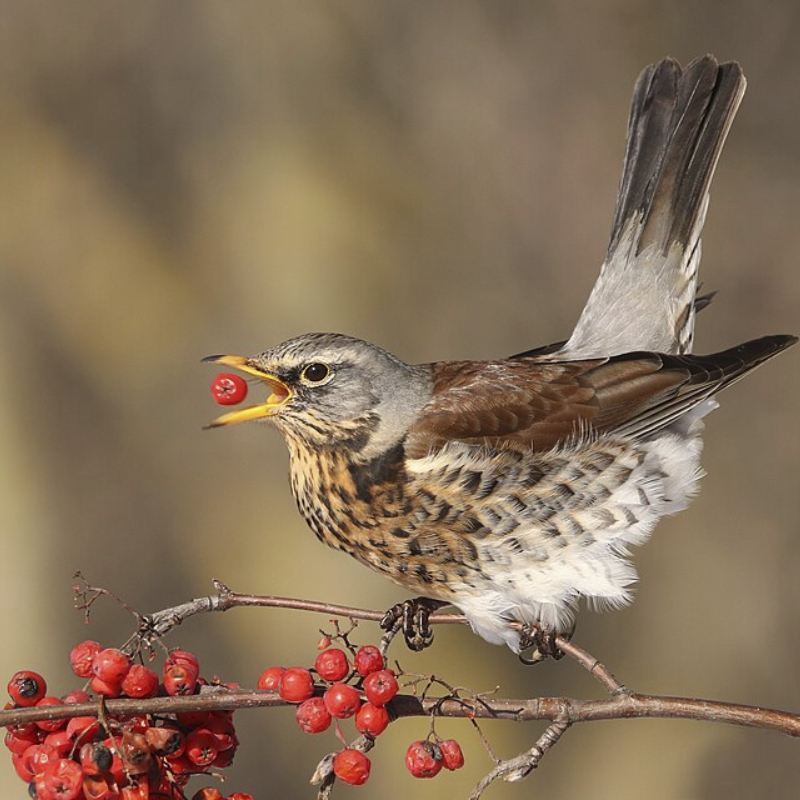
Photo credit: Romana Plačková, via Wikimedia Commons
In the summer, the fieldfare feeds primarily on earthworms, insects, and their larvae living in the soil. However, small animals such as snails and arachnids also play an important role. Berries and fruits become particularly important only in late summer and winter, when no animal food is available.
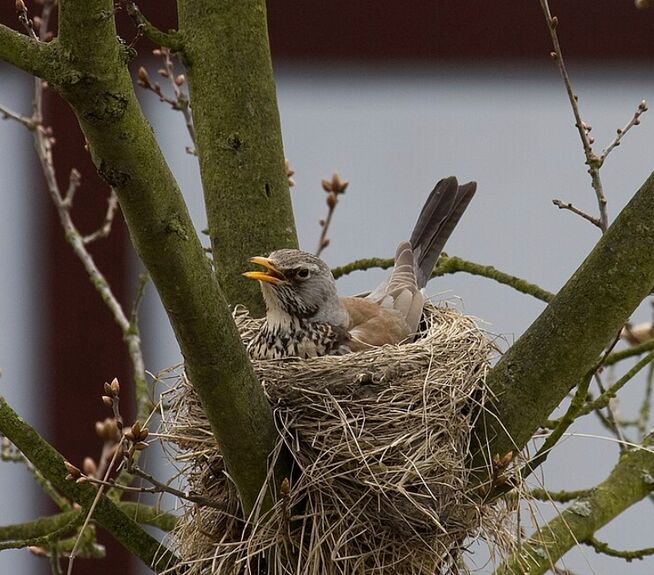
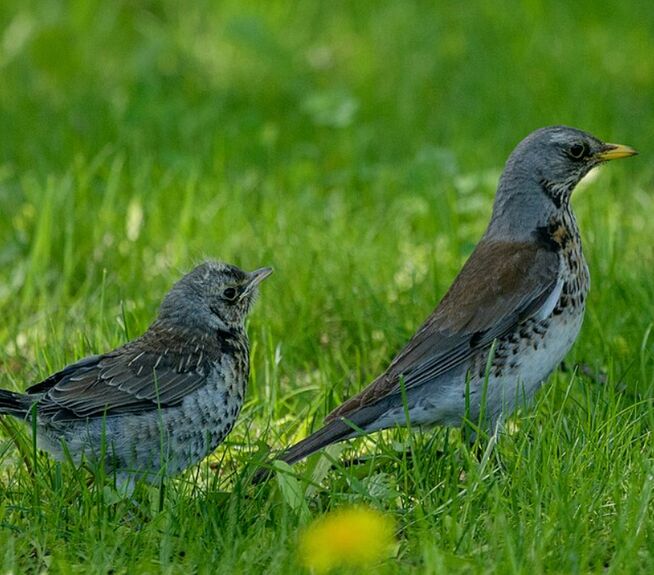
Image credit:
Andreas Trepte, via Wikimedia Commons
Fieldfare family, via Wikimedia Commons
The birds reach sexual maturity in their first year of life and form monogamous seasonal pairs, defending their breeding territory against others during the breeding season (April through July). However, they live in very social groups year-round, and their territorial behavior subsides after the eggs are laid. For this reason, field thrushes can also be found nesting in small colonies in deciduous and coniferous trees. The female lays 5–6 eggs, which she incubates for about 2 weeks. The altricial chicks remain in the nest for about 2 more weeks and are fed jointly by both parents before leaving it. After about 30 days, the young are independent. There are 1–2 broods per year.
Outside the breeding season, field thrushes are almost always found in large flocks, which may also include other thrush species in the fall and winter.
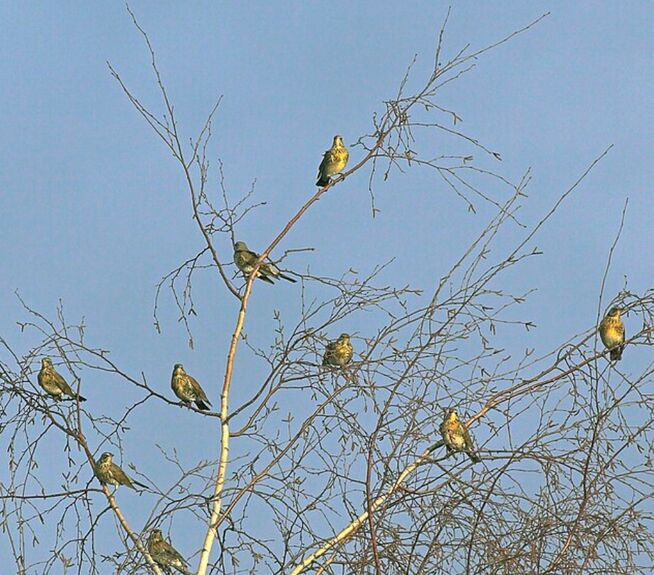
Image credit: via Wikimedia Commons
The fieldfare is a partial migrant and is found from the taiga to Central and Western Siberia and across large parts of Europe as far as central France. Its Austrian population is clearly concentrated in the Alps and the Bohemian Massif. The Pannonian region and the southeastern Alpine foothills are inhabited only sporadically and in isolated pockets.
Here in the " Seewinkel ," the fieldfare is a common migrant and winter visitor from late October through early April, and it breeds in the area only sporadically. In winter, there is a large influx of birds from the north.
To breed, the fieldfare requires wooded farmland, open deciduous and mixed forests, field copses, tree-lined avenues, parks, and gardens. In winter, it can be found in open forests, on farmland with hedgerows, in orchards, and in parkland.
According to BirdLife Austria, the fieldfare is classified as “Yellow” on the traffic-light system and is therefore among the birds with priority conservation needs. On the Austrian Red List, it is listed as “Threatened.” This indicates a declining population trend and a high risk of extinction in parts of its range.
Picture credits: Leander Khil
The best time of year to observe field thrushes is during the winter months. They often travel in flocks in search of food and are easy to spot by their calls. They forage in open areas and orchard meadows, but also move to hedges and trees. If you look very closely, you may sometimes see redwings or other thrush species in their company.
Picture credits: Leander Khil
Safari “
” On our “Winter Birdwatching” safari, you have the best chance of seeing the fieldfare, as it visits the Seewinkel as a winter visitor from November through March. Every year, a large flock can also be seen around and near the railing of St. Martins thermal baths & Lodge. On the “Bird Banding Tour” in winter, there’s always a good chance of spotting one—and with a whole lot of luck, you might even see a banded one.
The fieldfare in its natural habitat
The top searches of the last 30 days


The Discovery
of Adventure & Retreat
Enjoy the retreat from everyday life in a luxurious way - with a Great Discovery Tour and 50 min. feel-good time at Treatments by St. Martins. Discover yourself anew!

Relax! Day vacation - THE ORIGINAL
Enjoy a day out in the thermal spa business class under the motto "Relax!". Experience a spa stay in a class of its own with exclusive Relax! services. Your short vacation with a long-term effect is waiting for you!

Beyond Everyday Life Beauty & Safari
Leisure & wonder. Freedom & comfort. For a whole week. Experience the unique connection between healing thermal water and a tasteful lodge, nature experience and relaxation. Renew yourself!


